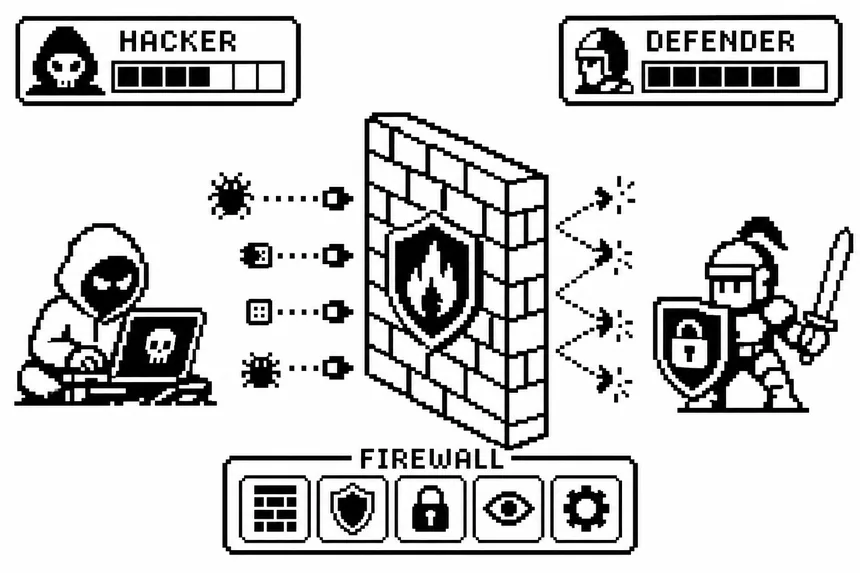
Darknet users face a broader cybersecurity threat landscape than typical internet users. In addition to the standard threats that affect all web users, darknet participants face adversaries who specifically target this ecosystem — including state actors attempting to de-anonymize users, criminal groups deploying credential-stealing malware, and market competitors engaging in sabotage. This article surveys the primary technical threats and the defenses available.
JavaScript Exploits and Browser Vulnerabilities
JavaScript execution in the browser is the primary attack surface for delivering malware to Tor Browser users. Malicious JavaScript can exploit browser vulnerabilities to achieve code execution on the host system, potentially revealing the user's real IP address and system information to an attacker-controlled server. This is not hypothetical — the FBI used a documented JavaScript exploit (operation Playpen in 2015) to de-anonymize Tor Browser users on a government-operated server.
The mitigation is straightforward: use Tor Browser's Safest security level, which disables all JavaScript execution across all sites. While this breaks the functionality of JavaScript-dependent sites, it eliminates the JavaScript exploit attack surface entirely. For darknet market access, where markets are typically designed to function without JavaScript, Safest mode is the appropriate setting.
Drive-By Attacks
Drive-by attacks deliver malware or exploits through passive page visits — the user does not need to click anything; simply loading a maliciously crafted page is sufficient. Attack vectors include:
- Malicious ad networks: Advertising systems that serve attacker-controlled content to users of legitimate sites
- Injected iframes: Hidden frames loading malicious content from a third-party domain
- Font and media exploits: Vulnerabilities in font rendering, SVG parsing, or media handling that trigger on page load
Tor Browser's Safest mode disables all of these vectors by disabling JavaScript, SVG, and non-essential media. The defense depth comes from the combination of Tor's network isolation and the browser's JavaScript-off policy.
Malware Targeting Darknet Users
Several malware families specifically target darknet market users:
- Clipboard hijackers: Malware that monitors clipboard content and replaces cryptocurrency addresses with attacker-controlled addresses. If a user copies a wallet address to pay a vendor, the hijacker silently substitutes a different address. The user sees the correct address in their clipboard only momentarily before the swap.
- Credential stealers: Keyloggers and form-grabbers that capture market login credentials and PGP passphrases.
- Fake Tor Browser bundles: Modified Tor Browser distributions containing backdoors, distributed through unofficial download channels.
Browser Exploit Kits
Exploit kits are automated frameworks that probe visiting browsers for known vulnerabilities and attempt to deliver payloads. They are commonly deployed on compromised legitimate sites and on dedicated malicious pages distributed through spam. Against Tor Browser in Safest mode, exploit kits are largely ineffective — the JavaScript-based fingerprinting and exploit delivery mechanism is disabled. Against Standard mode users, they present significant risk.
Security Hygiene Checklist
- Use Tor Browser set to Safest security level at all times on .onion sites
- Download Tor Browser only from torproject.org with signature verification
- Use Tails OS for maximum isolation between darknet sessions and regular computing
- Verify wallet addresses character-by-character before confirming transactions
- Keep all software updated on your daily-use system to reduce malware persistence risk
- Never install browser extensions in Tor Browser — each extension uniquely fingerprints your browser
Always check that your Tor Browser security level is set to Safest before accessing any .onion address. Default settings (Standard) enable JavaScript and expose you to browser exploit attacks.