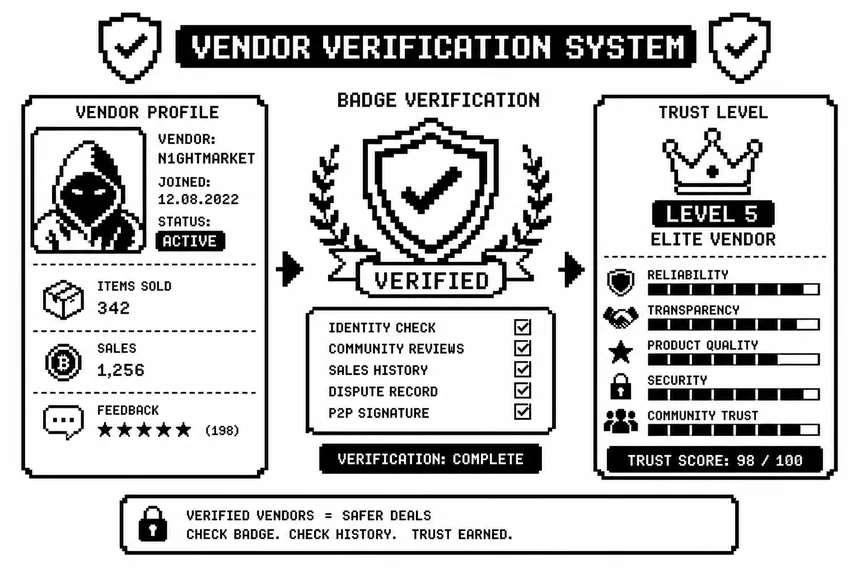
Vendor trust systems are the primary mechanism through which darknet markets address the fundamental problem of anonymous commerce: how do buyers evaluate sellers they cannot identify? The solution implemented across most serious platforms combines financial bonds, progressive trust levels, and transaction-weighted feedback scores. This article examines how these systems work and their effectiveness as fraud deterrents.
Vendor Bond Systems
A vendor bond is a cryptocurrency deposit that a new vendor must make before gaining permission to list products. The bond amount varies by platform — typically ranging from 0.02 to 0.5 XMR, or equivalent in BTC. The bond serves two functions:
- Financial barrier: The bond represents a real cost that must be lost before walking away. A vendor who intends to conduct a few transactions and disappear must weigh the bond cost against potential gains.
- Accountability stake: In dispute resolution, a history of bad vendor behavior can result in forfeiture of the bond. This creates ongoing accountability beyond the initial entry cost.
Bond amounts have generally increased over time as markets have found that higher bonds correlate with lower fraud rates. The downside of high bond requirements is reduced vendor supply — legitimate sellers with limited capital cannot participate, potentially reducing platform liquidity.
Trust Level Progression
Most mature platforms implement progressive trust tiers that unlock capabilities as vendors accumulate transaction history. A typical tier structure:
- Level 0 (New Vendor): Bond paid, basic listing capability, all orders in full escrow, limited FE access
- Level 1 (Active Vendor): 10-20 completed transactions with positive feedback, increased listing allowance, reduced escrow hold time
- Level 2 (Trusted Vendor): 50+ transactions, 95%+ positive rate, FE access for established buyers, dispute priority
- Level 3 (Verified Vendor): 200+ transactions, sustained positive history, premium listing placement, reduced fee rates
Feedback Score Weighting
Raw positive feedback percentage is an insufficient trust signal — a vendor with 10 transactions at 100% positive provides much less certainty than one with 500 transactions at 97%. Mature platforms weight feedback scores by transaction volume, with recent transactions weighted more heavily to reflect current vendor behavior.
Sybil resistance in feedback systems is critical. A vendor creating fake buyer accounts to self-generate positive reviews is a common fraud vector. Countermeasures include minimum account age requirements for reviewers, review limits per account, and anomaly detection on review patterns (multiple reviews from the same IP range, reviews with identical phrasing).
Vendor Doxxing Risks
Vendors face a distinct risk profile from buyers: their operational security must protect not only their identity but also their supply chain and shipping patterns. Common vendor doxxing vectors include:
- Package tracking correlation: Law enforcement correlating tracking numbers from multiple controlled deliveries to identify shipping origin locations
- Handwriting and package analysis: Forensic analysis of packaging material, printer fonts, and postage meter patterns
- Financial tracing: Bitcoin wallet analysis linking vendor revenue to exchange accounts or identified addresses
- Username reuse: The same handle appearing on multiple platforms or in clearnet contexts
Platform Accountability Mechanisms
Beyond bonds and ratings, platforms implement additional accountability measures: canary statements from vendors (PGP-signed commitments to notify buyers of OPSEC failures), vendor-specific dispute resolution history, and community reputation threads where buyers document experiences. The combination of these systems creates the closest approximation to a trust layer that anonymous commerce can achieve.
This analysis is based on documented platform features from publicly available sources. It is provided for educational purposes only.